
Head, flow, and daily demand — the three numbers that decide whether your solar pump disappoints or delivers.
Solar pumps rarely fail mechanically. They fail arithmetically. The system gets specced by panel count, copied from a neighbor, or bought off a “10,000 litres/hour!” label — pumps beautifully through the first sunny season, then comes up short in the cloudy month, or the dry month, or year three when the herd has doubled. The sun isn’t the problem and the pump usually isn’t either. The sizing is. Three numbers decide everything, and they’re all measurable before you spend a shilling.
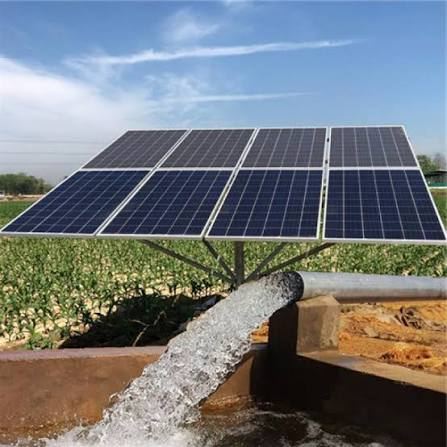
Number One: Daily Demand — Start Here, Not at the Pump
Work backwards. The question isn’t “what pump can I afford?” — it’s “how much water do I need on the single peak day of my hardest month?”
| Use | Daily demand |
|---|---|
| Rural household | 0.2–0.5 m³ |
| Lactating dairy cow | 60–120 L |
| 1 ha drip vegetables | 40–60 m³ |
| 1 ha overhead-irrigated field crop | 50–70 m³ |
The conversion that does most of the work for you: 1 mm of water over 1 ha = 10 m³. A vegetable crop drinking 5 mm/day at peak is asking for 50 m³/day per hectare, and it’s asking loudest in the hottest, driest weeks — exactly when your source is lowest.
Then add a 20–30% margin. The system you install should still deliver in year five, not just on the day the commissioning crew drove away.
Number Two: Total Dynamic Head — the Number Everyone Underestimates
Head is not “how deep the well is.” Total dynamic head is every metre the water must climb, and each component has a classic way of being undercounted:
- Static vs dynamic water level. The water level in a borehole drops while pumping — often 10 m or more — and drops further still at the end of the dry season. Design for the worst-case dynamic level, not the level the driller measured on a quiet morning.
- Delivery height. The elevation of the tank above the wellhead, plus the pipe route.
- Friction losses. Water drags against pipe walls. Unless you’ve calculated properly, add 10–15% of total head and accept it.
- Pressure at the point of use. Drip systems want 1–1.5 bar, which is another 10–15 m of head — unless your tank sits high enough to supply it by gravity.
One hard limit from physics: a surface pump can only pull water from about 7 m. Deeper source, and you’re buying a submersible. No brand overcomes this.
Number Three: The Solar Window — Design for the Worst Month
Peak sun hours (PSH) compress a whole day of sunlight into equivalent hours of full-rated sunshine. Most of East Africa averages 6+ PSH across the year — but the cloudy month can drop to 4.5–5. Size the array to the worst month, because that’s when the crop still needs watering.
This is also where flow rate gets decided: your pump must lift the entire daily demand within that shortened solar window. 40 m³ in a 5-hour window means roughly 8 m³/h at your actual head — and here’s the label trap: the “10,000 L/h” on the box is measured at zero head. The only honest number is the flow at your duty point on the pump curve. Buy the curve, not the sticker.
The Energy Math, Worked
One hectare of drip vegetables, borehole with dynamic level at 35 m, tank 10 m above the wellhead, 5 m friction allowance:
- Demand: 40 m³/day
- TDH: 35 + 10 + 5 = 50 m
- Hydraulic energy: 40 × 50 × 2.7 Wh ≈ 5.4 kWh/day (rule of thumb: every m³ lifted 1 m costs ~2.7 Wh before losses)
- Wire-to-water efficiency ~50%: ≈ 11 kWh/day of electricity
- Array: 11,000 ÷ (5 PSH × 0.75 derate for heat, dust, wiring) ≈ 2,900 Wp → install ~3 kWp
That’s the whole system in four lines of arithmetic. Run it with your numbers — including your cloudy month and your dry-season water level — and you’ll know more than most installation quotes will ever tell you.
The Tank Is Your Battery
The cheapest energy storage on any farm is an elevated tank. Batteries cost real money, need replacing every 5–7 years, and store electrons you already struggle to spare. A tank stores finished product, gravity-feeds the field, and lasts decades.
- Size it for 1–2 days of autonomy — enough to bridge cloudy days without dragging in a generator.
- Elevate it 10–15 m above the field and it supplies drip pressure for free, eliminating a booster pump entirely.
- Fit a float switch to stop pumping when full, and dry-run protection so the pump doesn’t cook itself when the borehole gasps. These two small components prevent the majority of premature pump deaths.
The Small Killers
- Dust. Dirty panels lose 15–25% of output — the same dust that coats your greenhouse plastic coats your array. Clean on a schedule, not on a whim.
- Undersized cable. Long DC runs on thin wire waste watts as voltage drop before the water even moves. Keep drop under 3% — buy the thick cable or a higher-voltage pump/controller.
- Direct coupling. An MPPT controller extracts 20–30% more water from the same array. Non-negotiable.
- Exact-size arrays. Panels are the cheap part now; the pump is the expensive one. Oversizing the array 20–30% stretches the pumping window into early morning and late afternoon, buying you hours of flow on marginal days.
The System on One Page
| Parameter | Value |
|---|---|
| Demand (peak month) | 40 m³/day |
| Total dynamic head | 50 m |
| Hydraulic energy | ~5.4 kWh/day |
| Electrical energy | ~11 kWh/day |
| Array (worst-month PSH 5.0) | ~3 kWp |
| Storage | 40–80 m³ tank, elevated for gravity drip |
| Result | Full delivery in the cloudiest week of the demand season |
The Bottom Line
A disappointing solar pump isn’t a solar problem or a pump problem — it’s optimism doing the job of arithmetic. Demand measured at the peak, head measured at the dry season, sun measured in the worst month, and a tank standing in for the battery you were tempted to buy. Get those three numbers right, and the system delivers in the month you actually need it — which is the only month that ever really counts.