Torn covers cost you more than you think. Here’s how to spot UV degradation before it costs you a crop cycle.
Greenhouse polythene has a working life, and it’s shorter than most growers want to believe. Even quality films typically last only three to four seasons — and the cover that looks acceptable from the ground in autumn can fail during the first January storm, or quietly rob you of yield for an entire crop cycle before it fails at all. The good news: polythene tells you when it’s dying. You just have to know the symptoms.
1. Yellowing, Chalking, and a Failed Bend Test
UV stabilizers are the sacrificial ingredient in greenhouse film — they deplete with every hour of sun exposure. Once they’re exhausted, the polymer itself starts breaking down. The film turns yellow or takes on a chalky, milky haze, and it loses flexibility.
The test: Snip a small strip from an edge or corner and fold it sharply. Fresh polythene bends clear and springs back. Aged film whitens at the crease, cracks, or splits outright. A film that fails the bend test is one strong windstorm away from tearing across an entire bay.
2. Tears and Cracks at Stress Points
Inspect the places where the film is fixed: wiggle wire channels, batten lines, rope lock channels, and around bolts. This is where fatigue shows first — small splits that expand with every thermal cycle and every gust. Even pinholes matter: they admit cold drafts and insects while letting your humidity and heat budget leak away. A tear you can cover with your thumb today will be a meter long by spring.
3. Light Transmission Is Slipping
New greenhouse film transmits around 90% of usable light. Dust, algae, grime, and polymer degradation drag that number down season after season — and a common rule of thumb is that every 1% of light lost costs roughly 1% of yield. That’s invisible day to day but devastating over a full cycle, especially through short winter days when light is already the limiting factor.
The test: On a bright, overcast day, take light readings outside and at crop height inside, and compare. Wash the cover first — sometimes the problem is just dirt. If you’re still below 80% transmission on clean film, the cover is a yield drag you’re paying for every day.
4. Dripping Instead of Sheeting
Anti-condensate (anti-drip) coating is usually the first thing to go — often within two or three seasons, long before the film itself is structurally spent. When it fails, condensation stops sheeting down the film and starts forming droplets that fall directly onto your crop. Wet foliage is an open invitation to botrytis and downy mildew, and heavy drips can physically damage seedlings and blooms. If your greenhouse “rains” inside on cold mornings, the coating is done even if the plastic looks fine.
5. Sagging You Can’t Tension Out
Polythene loses elasticity as it ages. The cover that once snapped drum-tight now develops pockets no amount of re-tensioning will remove — and every sag collects condensation, rain, or snow, whose weight stretches the film further in a downward spiral. A loose, flapping cover also loses heat, fatigues the film faster, and works against the structure itself. If re-tensioning doesn’t hold, the film has stretched past the point of recovery.
Time the Replacement Right
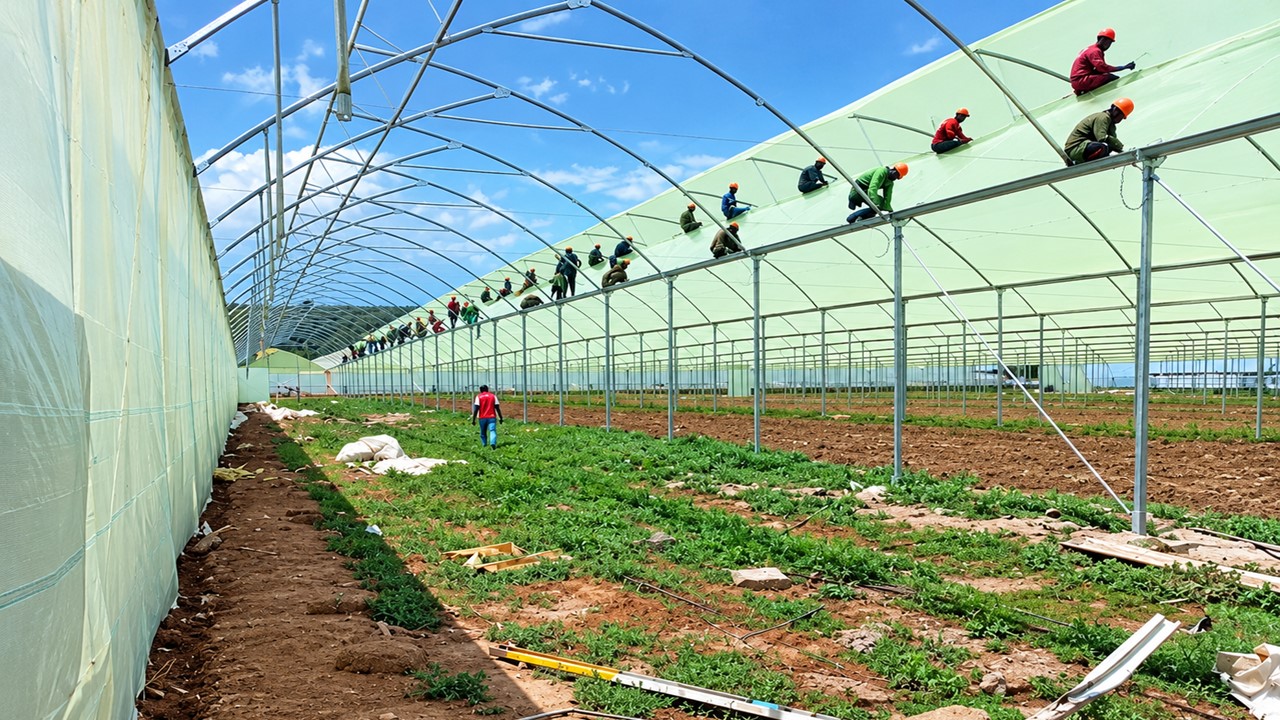
Don’t wait for failure — plan for it. Standard films deliver three to four seasons; premium UV-stabilized films can run five to eight, though high altitude, intense sun, and heat shorten that significantly. Replace between crop cycles, never mid-production, and inspect covers at least twice a year — in spring and autumn, before the seasons that punish them hardest.
The Bottom Line
Polythene is not an “until it tears” purchase. By the time a cover tears, you’ve already been paying for months — in lost light, disease pressure, dripping water, and escaped heat. Walk the structure, run the bend test, take a light reading, and watch how condensation behaves. The cost of recovering is a rounding error next to the cost of a lost crop cycle.